Two decades of the ISS
https://danielmarin.naukas.com/files/2018/11/DsdIwMYXcAE2Sfs-1024x653.jpg
Two decades of the ISS
On November 20, 1998, the Zaryá module ('dawn' in Russian) took off from Baikonur, the first piece of the International Space Station (ISS). Ironies of destiny, a spaceship designed during the Soviet era as part of the program of military space stations Almaz became the first element of an international project built jointly with the United States. Twenty years later, the ISS is already the most expensive and longevity project of the space age. We can not say that it is the most ambitious or spectacular because obviously that honor belongs to the Apolo program -and its equivalent on the other side of the Iron Curtain-, but it has shown that it is possible to live in space indefinitely and, most importantly, , that nations from all over the world can collaborate without faltering in a spatial macroproject for decades.
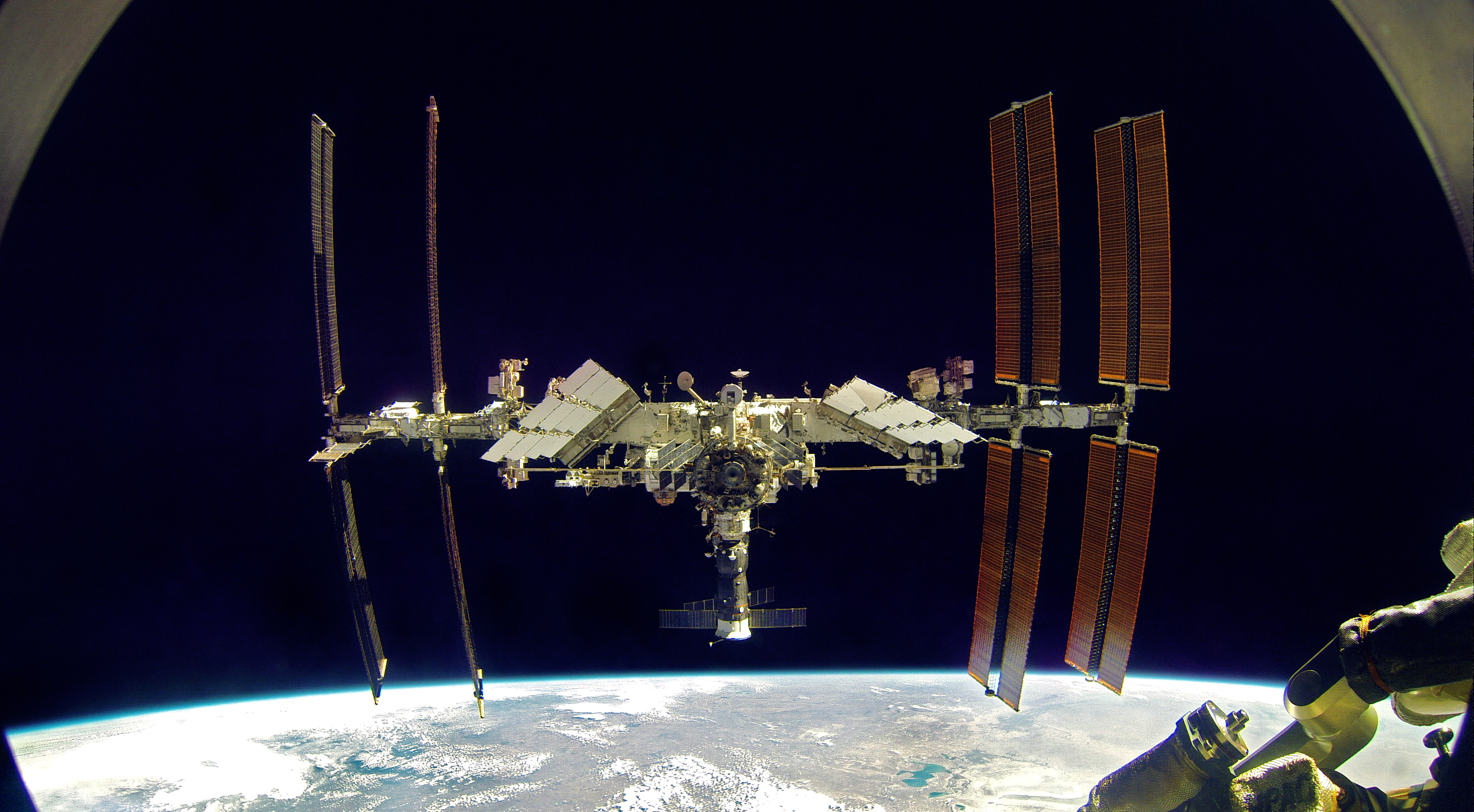
The ISS seen from a Soyuz spacecraft (Roscosmos).
The ISS was the result of the spirit of collaboration that emerged after the end of the Cold War. But it was also the fruit of necessity, because the old rivals could not afford the costs of their respective space projects separately. Russia did not have the money to carry out the Mir 2 and in the United States, although with an infinitely better economic situation, the White House was unable to convince Congress of the need to develop the Freedom space station. The ISS allowed the governments of Russia and the United States to bypass the restrictions imposed by their political systems and their respective economies in order to build the largest orbital complex in history.
The Proton rocket with the Zaryá module (FGB) (Roscosmos).
The Zaryá module (FGB) and the Unity (Node 1) coupled in orbit after the STS-88 mission (NASA).
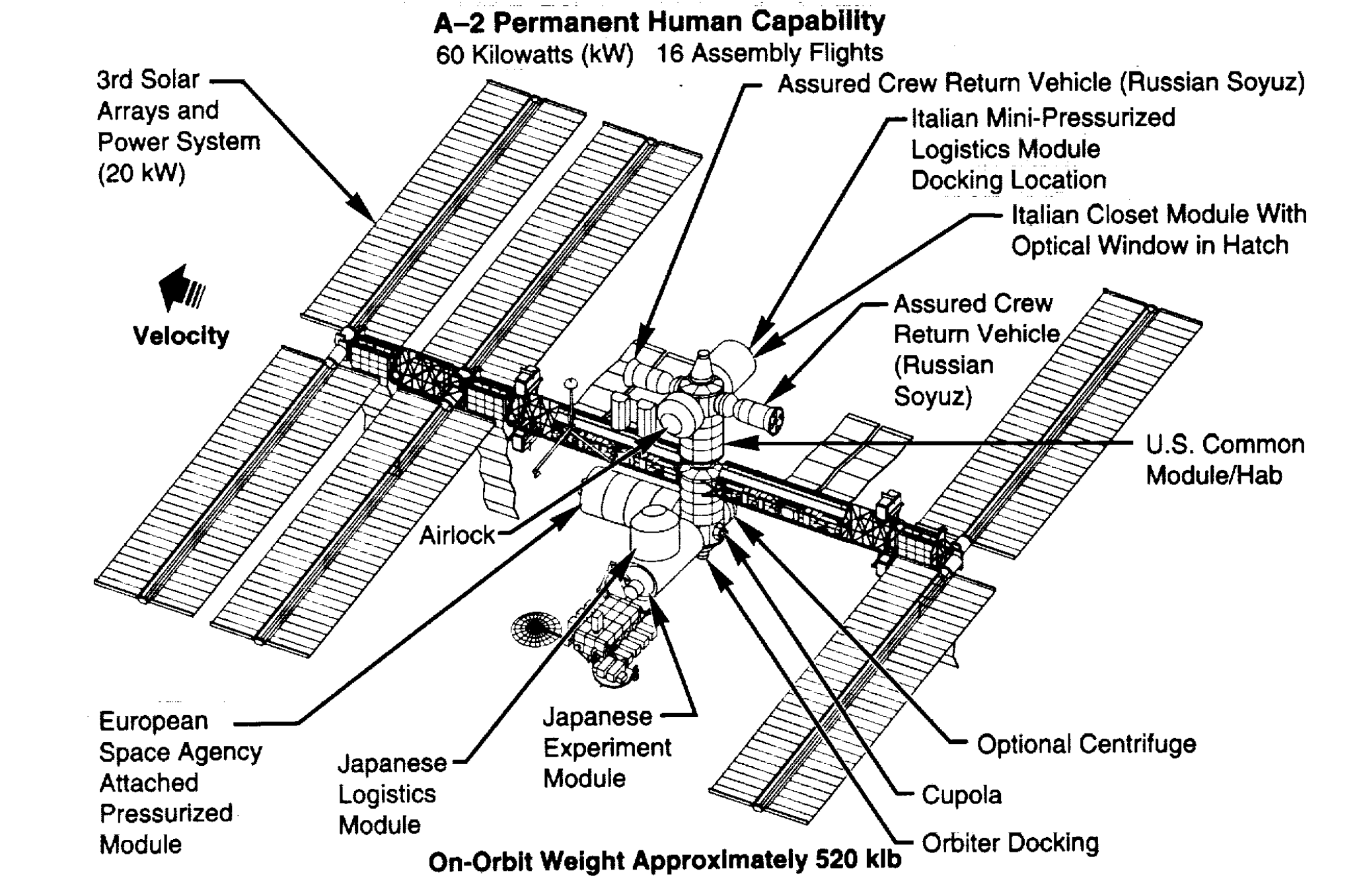
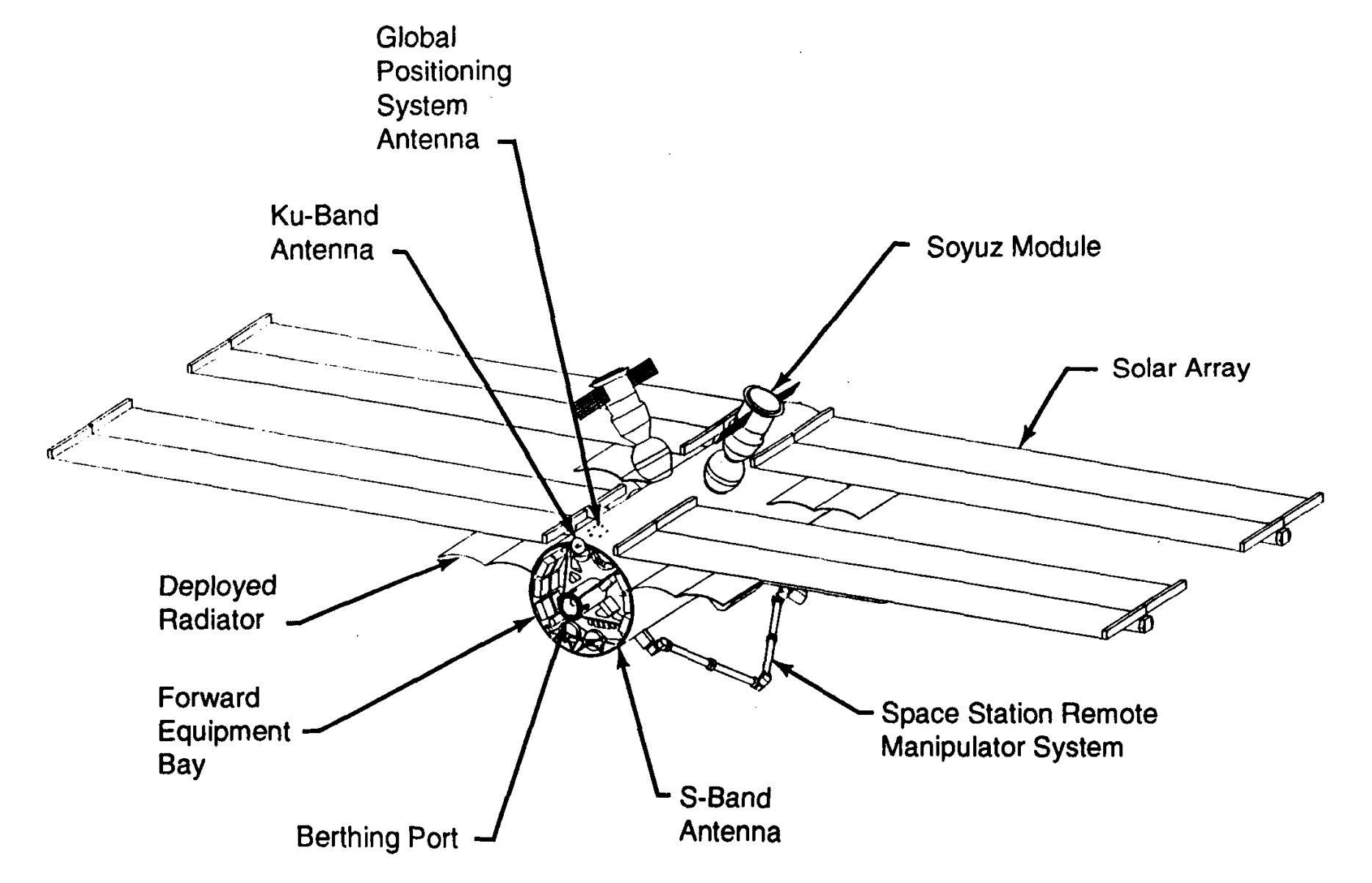
In June of 1993 the station Freedom, that at that time already was known simply like "space station" in an attempt to be unmarked of the political ballast of the Pharaonic project that had been born during the Reagan era, survived by a single vote an attempt of cancellation on the part of congressional. And that it was a much more modest version than the original. The NASA space station in 1993 was actually the seventh design of the project in almost a decade, a project that had not stopped dwindling. The station would still have a Japanese and a European module - the Columbus - but the number of US modules would be smaller. This design, known as 'Option A' or 'Alpha', would be permanently manned by four astronauts and would make use of Soyuz ships supplied by Russia as emergency vehicles to save costs. NASA refused to include its laboratory module -Destiny- and the node modules in a desperate attempt to lower the station's bill. The project would still have Japanese and European scientific modules, but without the nodes the layout of the modules was less elegant and gave the station a somewhat dazed appearance.
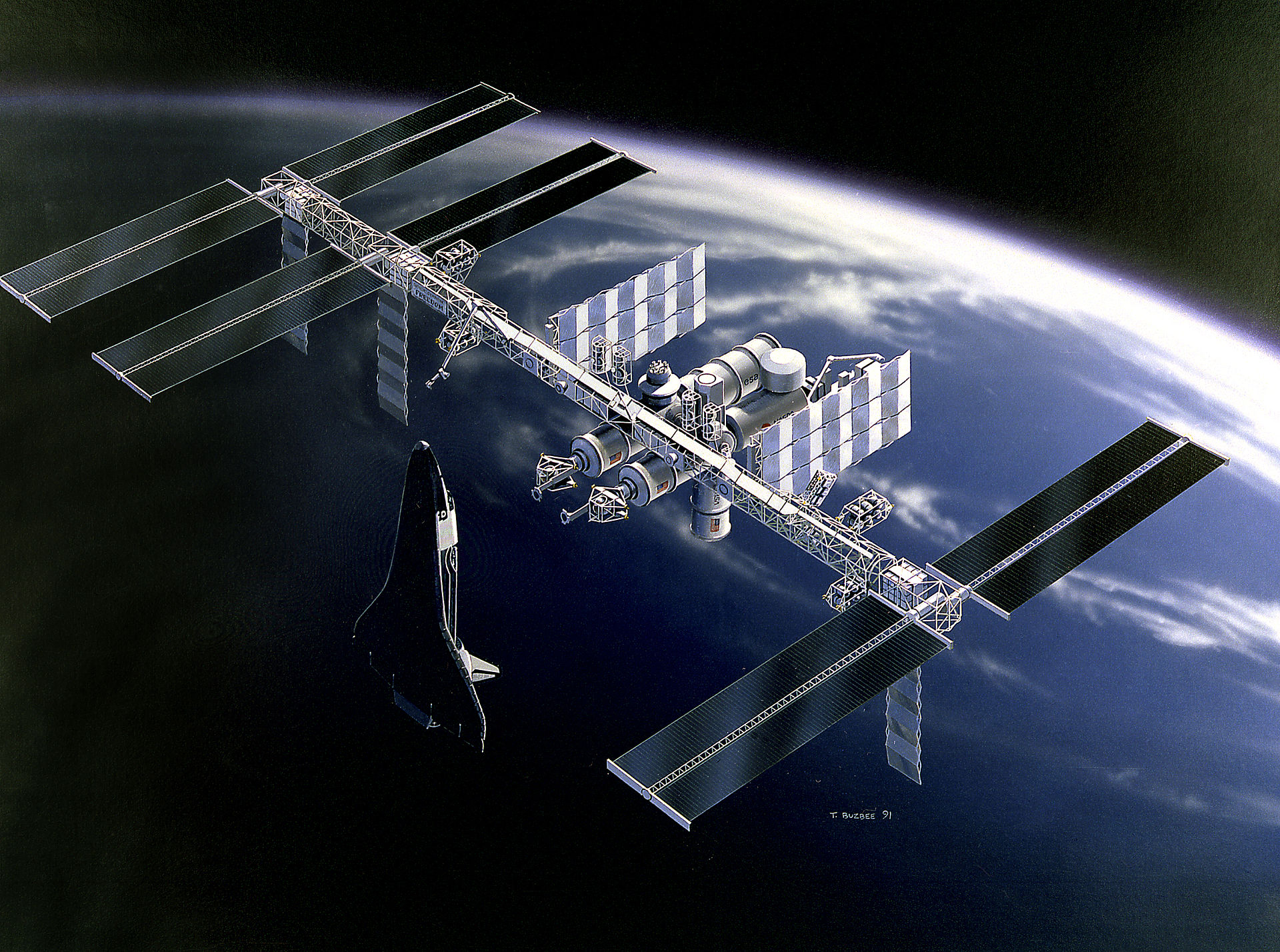
Design of the Freedom space station of 1991 (NASA).
Design of the 'Option A' of 1993 with Russian Soyuz ships as emergency vehicles (NASA).
Curiously, the station would orbit the Earth with the central beam parallel to the direction of the advance, that is, 90º with respect to the current trajectory of the ISS. In principle, the station would be located in a 28.8º inclined orbit to take full advantage of the shuttle's load capacity, but that would have forced the Soyuz ships to be replaced on a regular basis by means of the shuttle. For this reason it was considered to launch the elements of the station in a 51.6º orbit, so that, in this way, Russia could launch the Soyuz ships directly to the station from Baikonur. The first module of Option A was due to take off in 1997 and the assembly would be complete in 2000.
Elements of the NASA space station Option A of 1993 (NASA).
Option B of the Freedom of 1993 (NASA).
Detail of the modules of option B with Soyuz spacecraft (NASA).
In addition to Option A, NASA was shuffling Option B, basically the previous Freedom design, but with Soyuz capsules. In 1993 it was vox populi that Option B had no chance of being approved. Another possibility was Option C, a last cartridge that NASA kept if everything else failed. It was a station that could be put into orbit by a single launch of a modified ferry. It would also use Soyuz spacecraft as emergency vehicles and would have European and Japanese modules. It was clear that the space agency was willing to do everything to avoid running out of space station.
Option C of 1993 (NASA).
Another view of Option C (NASA).
Option A did not like anyone at NASA (and Option C was considered an aberration). After almost a decade waiting to build the great Freedom station, the new space station was disappointing. But the Clinton administration had an ace up its sleeve. The negotiators of the NASA in Moscow not only had discussed the Russian participation through Soyuz ships, but had opted for a Russian involvement on a large scale that went through the merger of the Mir 2 project with the Freedom. In this way the station could have a much larger size and, in fact, it would be larger than the original Freedom (450 tons versus about 250) tons. NASA would again have its modules and large nodes and also recovered the fourth pair of solar panels that had been removed in the early 90s, raising the available power from a minimum of 60 kilowatts to 85 kilowatts. This option was baptized within NASA as the 'Russian Alpha'.
Final design of the Russian Mir 2 of 1993 (ESA / RKK Energy).
Another view of Option A of 1993 (NASA).
For its part, the Mir 2 was a station that had a central module type TWO of twenty tons similar to that of the Mir and the rest of civilian Salyut stations, in addition to eight specialized modules (two modules of coupling and lock, two nodes with eight docking ports each and four specialized scientific modules). The total mass of the Mir 2 would be 120 tons, similar to that of the Mir, but its useful space would be better used because large 77K modules derived from the TKS ships of the Almaz program of the Cheloméi design office would not be used. smaller and optimized modules. The other great novelty of the design would be a central beam similar to that of the Freedom, but much smaller. In this beam would be located a pair of solar panels and two solar generators using turbines (elements that were also provided in the original design of the Freedom of the 80s).
Egypt seen from the ISS (NASA).
The DIscovery coupled to the ISS (NASA).
The new space station would be located in a 51.6 ° inclined orbit so that it could be accessible from Baikonur. In return, this new inclination would allow greater coverage of the earth's surface. The Russian participation would allow the station to be inhabited almost from the beginning of the construction, since the Russian modules are small, practically independent miniature craft. Logically, the partners of the Freedom station were added: Europe, Canada and Japan. China, which years later showed its desire to collaborate in the project, would be left out by express order of the US Congress, a veto that continues to this day. However, the development of the project would not be without problems. Russia and the USA could not agree on the compatibility of the basic systems and finally the station would be formed de facto by two independent stations: the Russian segment and the American segment, which includes the European module Columbus and the Japanese Kibo. The first module, Zaryá, was paid with NASA money to reinforce the complex's capacity to store fuel and raise its orbit, a capacity that, by the way, is absent in the US segment. The US and Russia could not even agree on the name of the project. While NASA wanted to baptize the station as Alpha, Russia considered this name an insult that erased its previous extensive experience in space stations (do not forget that Mir was still in orbit when Zaryá was launched). And in the end we had to settle for the bland English acronym of ISS (or, for those who prefer, MKS in Russian).
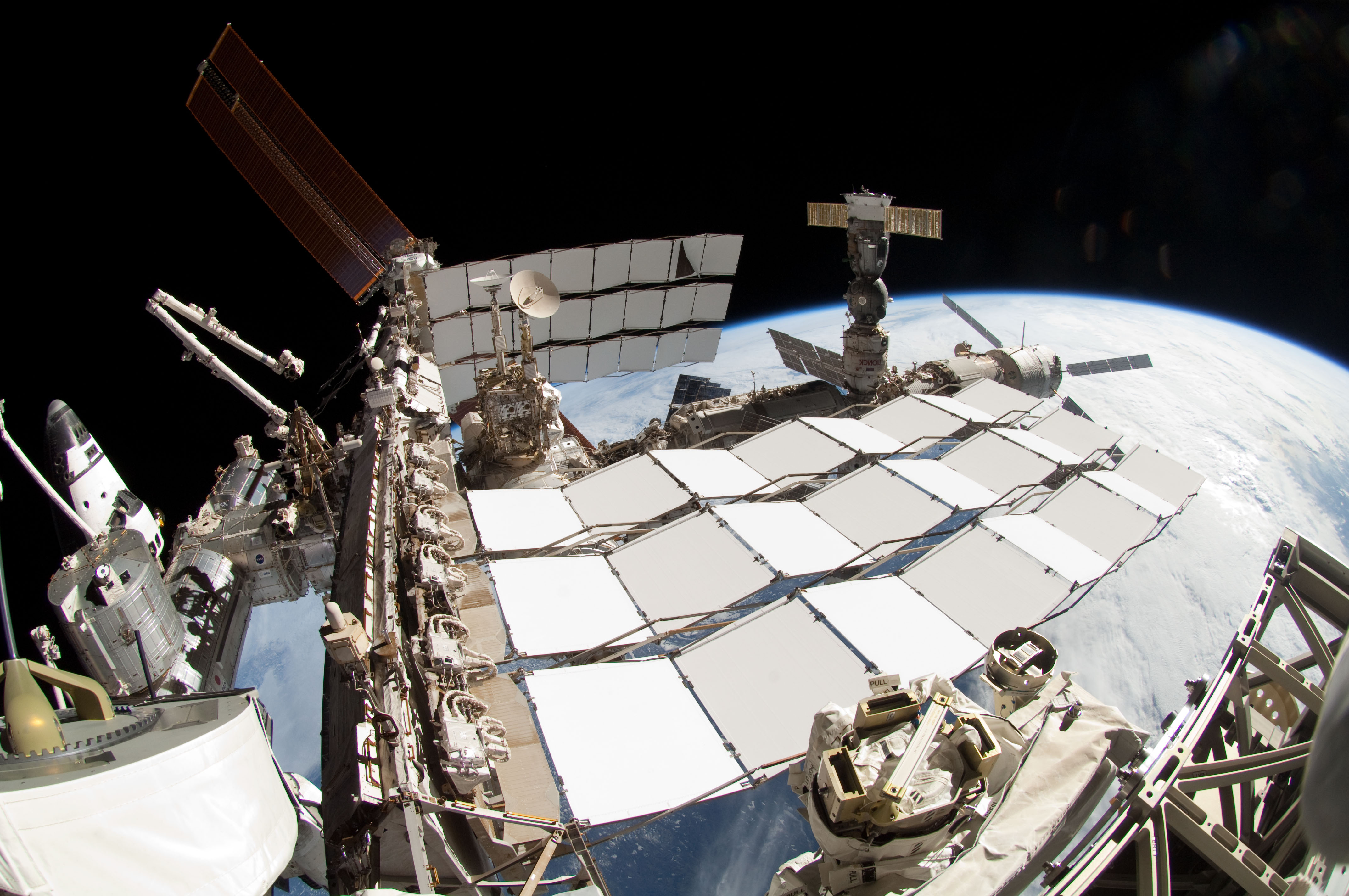
The ISS with the shuttle Endeavor and the ATV-2 trailers seen from the Soyuz TMA-20 (NASA).
The ISS is the largest object in orbit (NASA).
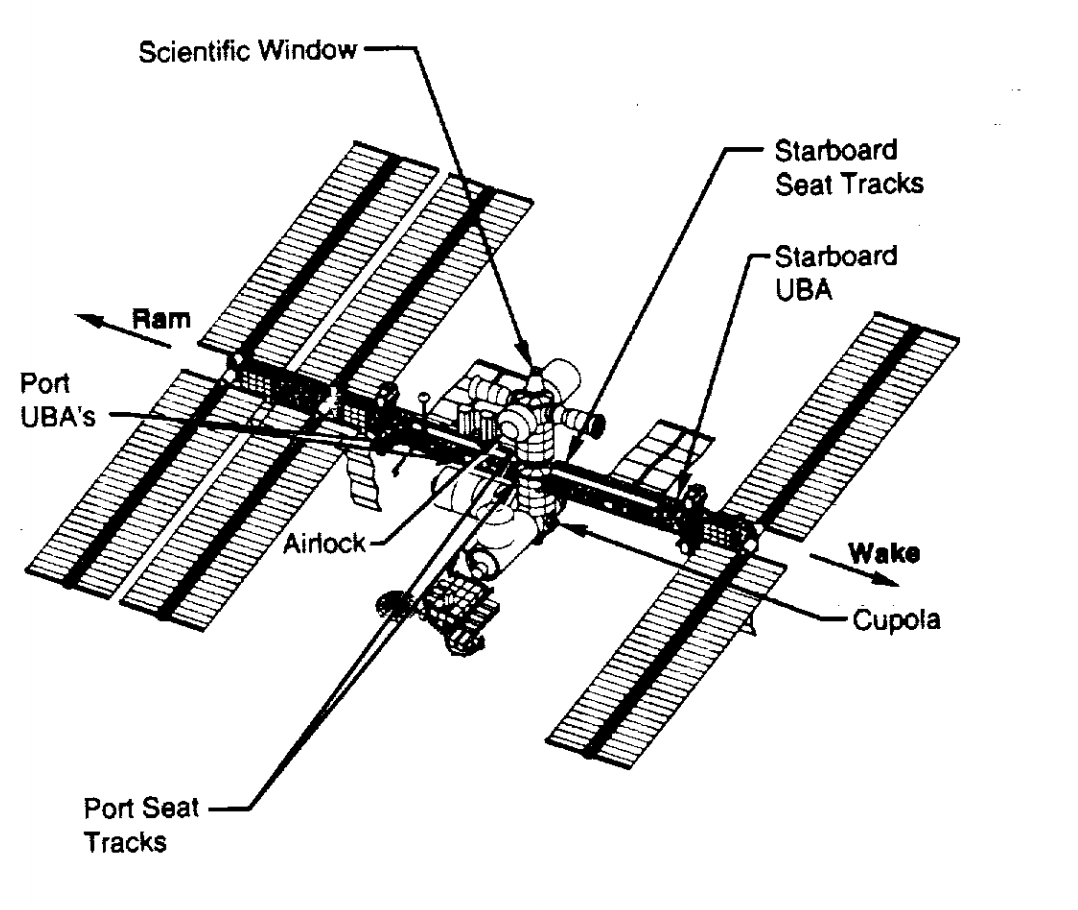
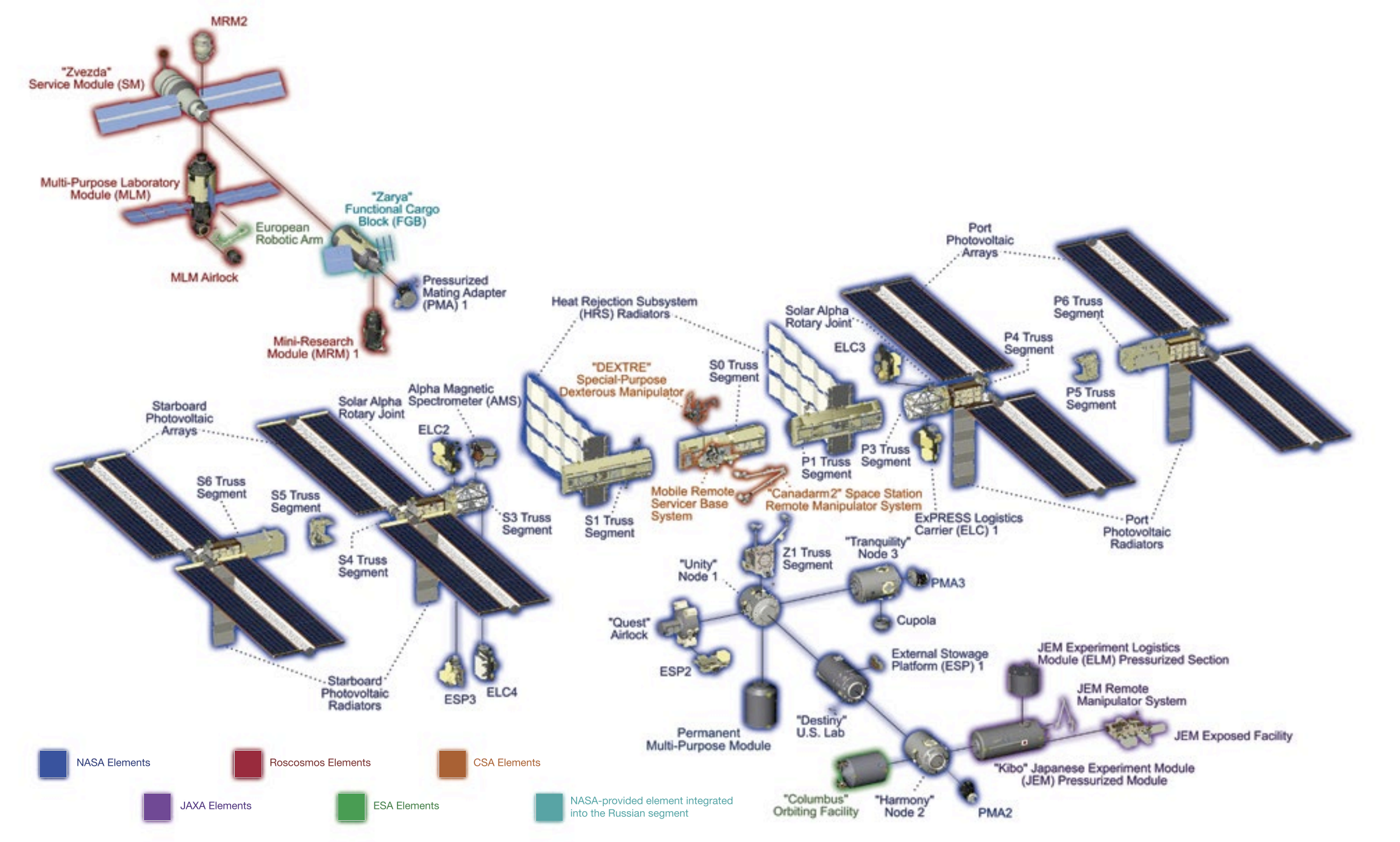
Modules and parts of the ISS (NASA).
The Cupola module (NASA).
Since 1998 Roscosmos has launched to the station 56 Soyuz ships and 71 Progress cargo ships. NASA has sent 37 missions from shuttle, 11 cargo ships Cygnus and 16 Dragon ships, while ESA has participated with 5 ATV ships and the Japanese agency JAXA with 7 HTV ships. More than 230 human beings have passed through the ISS and, of these, 114 have been part of long-term expeditions. The ISS has been permanently inhabited for 18 years, although no astronaut has surpassed Valeri Polyakov's record of staying for 14 months in the Mir in 1995 (the record of permanence in the ISS in a single mission is 340 days and he is in possession of Scott Kelly and Mikhail Korniyenko). Together with Mir, the ISS has made living in space seem easy and routine. In these two decades there have been several failures of missions to the station, including the launch of a manned Soyuz, but there has been no victim or really dangerous situation (leaving aside specific events such as the day that Luca Parmitano he almost drowned in his scuba during a spacewalk).
The views are spectacular (NASA).
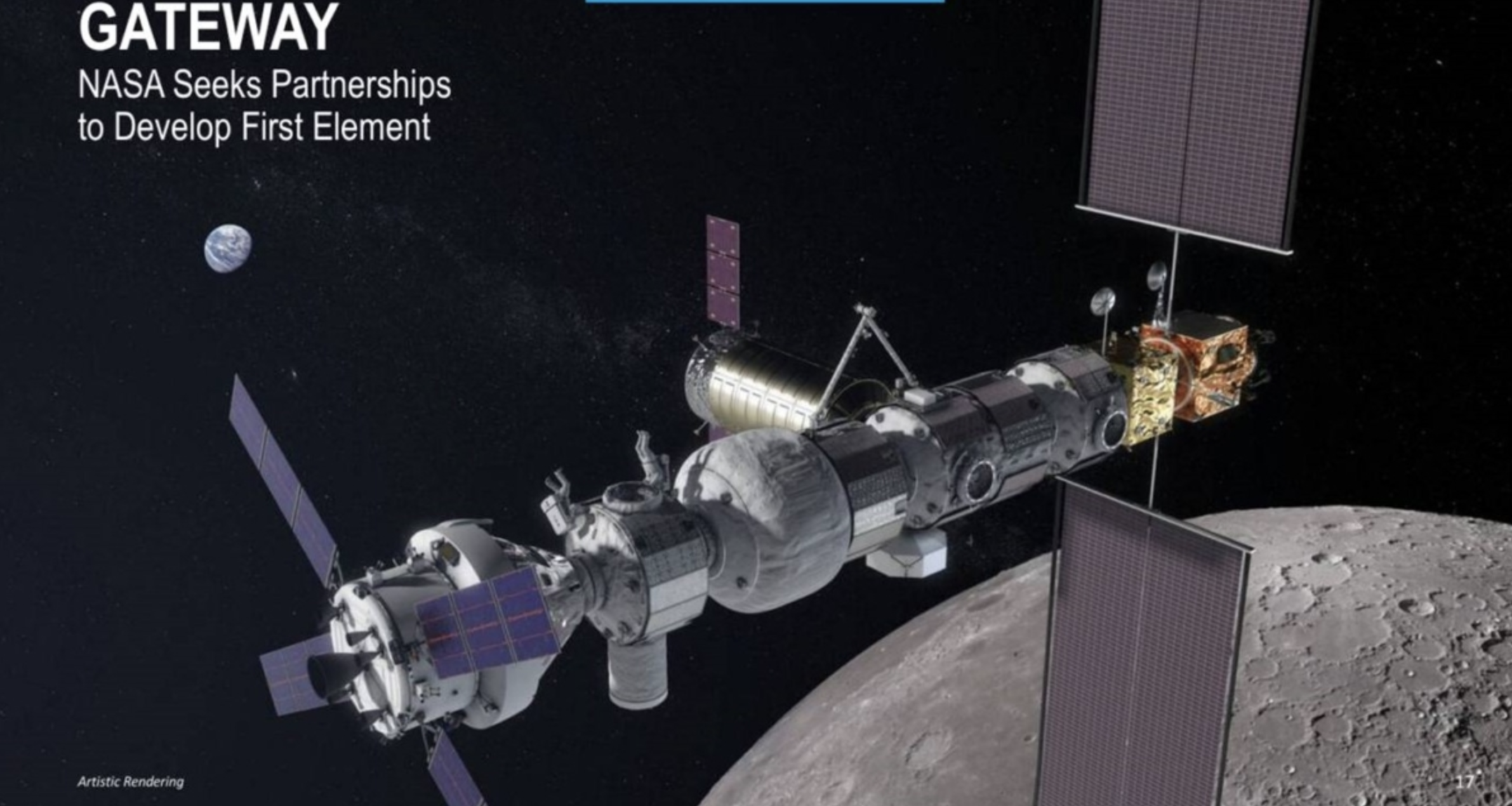
The useful life of the ISS has expiration date: 2024. Unless the project partners decide to extend it until 2028, so it may be that in another ten years the ISS will remain active. But, in any case, the Trump administration has shown its desire to leave the ISS in 2024 to dedicate itself to the construction of the Gateway lunar station, which, thanks to the participation of Europe, Japan, Canada and, perhaps, Russia, can be turn into a kind of mini-ISS around our satellite. Of course, unlike the ISS, Gateway is a project led indisputably by the US. Russia has announced that when the useful life of the ISS ends, it will separate some of the modules of the Russian segment that are still to be launched to build its own fully Russian station called ROS (Russian Orbital Station). And in the meantime, China will build its permanent sixty-ton space station. That is, each one by his side. A perfect metaphor of current international relations transferred to space. The ISS has received a lot of criticism, but, after twenty years, we can ask ourselves what would have happened if in 1993 the USA and Russia had not decided to collaborate in the ISS. Would the alternative have been worth it?
Grupos de privacidad que reclaman anuncios en línea pueden dirigirse a víctimas de abuso
https://media.wired.com/photos/5c4bd1aaf254572cc21b81f8/191:100/pass/TrackerAdsAreBad%20(1).jpg
Grupos de privacidad que reclaman anuncios en línea pueden dirigirse a víctimas de abuso
Defensores europeos de la privacidad dicen que el complejo proceso de licitación detrás de la publicidad conductual en línea amenaza la privacidad de los consumidores. Para colocar anuncios en las páginas web, las empresas difunden ampliamente lo que saben sobre un usuario que visita la página, incluidos datos potencialmente confidenciales sobre el tipo de contenido que la persona ve, escucha o lee. Los nuevos documentos presentados el lunes ante los reguladores en Polonia, el Reino Unido e Irlanda afirman que la forma en que se manejan los datos personales durante el proceso de hacer coincidir los anuncios con los espacios publicitarios no cumple con los requisitos de la Unión Europea. Reglamento general de p...
¿Puede Apple Watch prevenir los golpes? Nuevo estudio pretende descubrir
https://static.foxnews.com/foxnews.com/content/uploads/2018/09/dcd037e4-Apple-Event_Vros.jpg
¿Puede Apple Watch prevenir los golpes? Nuevo estudio pretende descubrir
Foto del archivo: El CEO de Apple, Tim Cook, habla sobre el nuevo Apple Watch durante un evento de Apple el lunes 9 de marzo de 2015 en San Francisco. (Foto AP / Eric Risberg) manzana El reloj ya ha sido acreditado con salvando vidas alertando a los portadores sobre las condiciones del corazón. ¿Pero puede el smartwatch prevenir golpes? Un nuevo estudio de Johnson & Johnson pretende descubrirlo. La compañía farmacéutica se está asociando con Apple para estudiar si las notificaciones de ritmo irregular del wearable y la aplicación de ECG en el Apple Watch Serie 4 pueden ayudar a acelerar el diagnóstico de fibrilación auricular (una enfermedad cardíaca que puede provocar un accidente cerebrovascular) y mejor...
Las empresas ofrecen regalos gratuitos, ofertas especiales de cierre y asistencia a los trabajadores...
https://www.gannett-cdn.com/presto/2019/01/10/USAT/55317dbc-b9c3-4865-aa96-228ae272a325-fazoli.jpg?crop=1240,698,x0,y0&width=3200&height=1680&fit=bounds
Las empresas ofrecen regalos gratuitos, ofertas especiales de cierre y asistencia a los trabajadores federales
CERRAR Los empleados federales sin permiso recurren a las clases de improvisación durante el cierre del gobierno en el Washington Improv Theatre. Jack Gruber, USA HOY Llámalos "ofertas especiales de apagado" y "regalos gratuitos". Mientras que un acuerdo para poner fin al cierre de gobierno más largo parece estar muy lejos Algunas empresas están ofreciendo a los trabajadores federales con licencia un poco de alivio que va desde comidas gratis, descuentos en restaurantes, aplazamiento de pagos y préstamos sin interés. Alrededor de 800,000 empleados federales han estado sin...














Comentarios
Publicar un comentario